
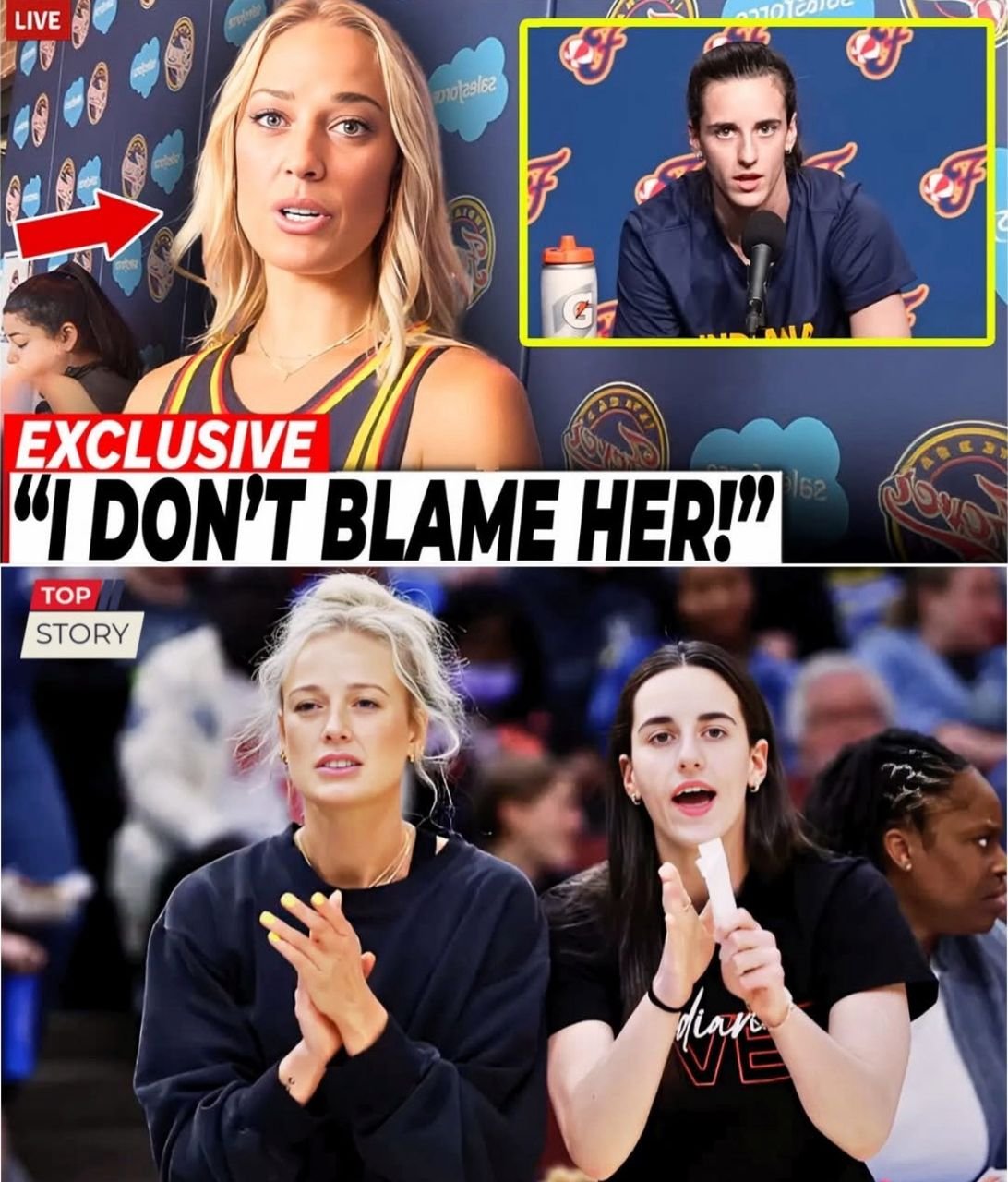
Sophie Cunningham, a rising star in the WNBA and vocal leader on and off the court, has spoken out strongly in defense of Caitlin Clark amid swirling rumors that the Indiana Fever rookie may leave the league. With growing media scrutiny and mounting controversy surrounding Clark’s treatment in the league, Cunningham’s support marks a pivotal moment in the ongoing conversation about how the WNBA handles its young talent. “People forget she’s 22,” Cunningham said. “She’s carrying the weight of a whole league on her shoulders, and that’s not fair.” Her comments come as fans and analysts debate whether Clark’s high-profile entry into the league has been met with appropriate respect and support.

The rumors of Clark potentially stepping away from the WNBA have sent shockwaves through both sports media and the league’s fanbase. Drafted as the No. 1 overall pick, Clark entered with massive expectations after a historic college career at Iowa. However, her rookie season has been met with a mix of exceptional performances, physical play, and what many believe is undue criticism from fellow players and media figures. Cunningham acknowledged the rough path Clark is navigating: “She’s getting hacked every night, criticized in the press, and still showing up. That’s toughness.”
Cunningham’s defense of Clark didn’t just focus on the on-court physicality — it also touched on the broader culture of the league. She raised concerns about how the WNBA treats its breakout stars, especially young white athletes in a predominantly Black league. “We’ve got to have honest conversations,” she said. “There’s room for everyone, and if we want the game to grow, we need to support each other — not tear each other down.” Her remarks sparked immediate conversation online, with many fans applauding her courage to address such a sensitive topic.
What makes Cunningham’s comments particularly powerful is her own experience in the league. Known for her grit, leadership, and vocal presence, she has faced her share of adversity and understands the mental toll the league can take on young players. “If Caitlin left, it wouldn’t be because she couldn’t handle it,” Cunningham emphasized. “It would be because she shouldn’t have to handle all this alone.” Her words have resonated with fans who feel that Clark has become a lightning rod for every criticism about the league, its media coverage, and internal politics.
Clark herself has not publicly confirmed any plans to leave the WNBA, but the speculation alone underscores how precarious her situation feels to many observers. Sophie’s vocal support may mark a turning point in how fellow players, media members, and league executives treat this unique moment in WNBA history. Cunningham urged everyone — fans, coaches, and media alike — to remember that “this is a human being we’re talking about, not just a headline or a highlight reel.”
As the WNBA continues to grow and evolve, the Caitlin Clark saga may serve as a case study in how the league adapts to new levels of fame, media attention, and player pressure. Sophie Cunningham’s defense of Clark is more than just a teammate speaking out — it’s a call to action for a league at a crossroads. Whether Clark stays or goes, one thing is clear: the WNBA must confront how it supports — or fails to support — its brightest stars.
