
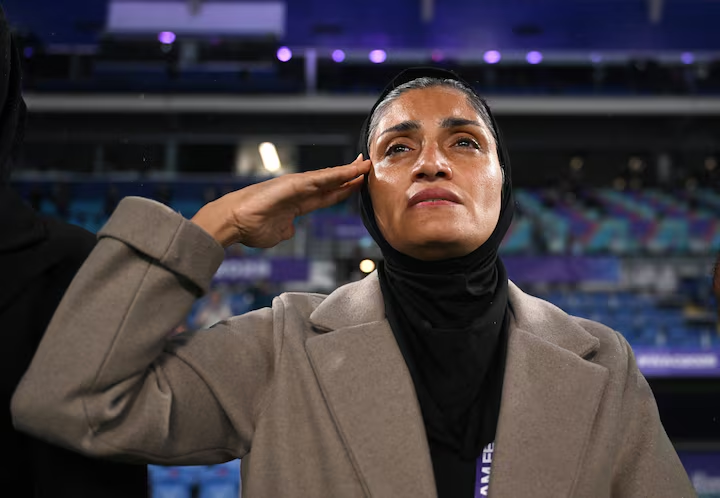
An anthem played. A team stood silent. And in that single moment of stillness, everything unravelled.
When Iran’s women’s football team chose not to sing their national anthem before their opening Asian Cup match against South Korea, they could not have known what was coming. Back home, a state television presenter had a word for them. Not brave. Not grieving. Not human. “Traitors.”
“Wartime traitors,” to be precise.
The words landed like a grenade inside an already shattered dressing room. The tournament had begun just as the United States and Israel launched air strikes on Iran, killing Supreme Leader Ali Khamenei. These women were thousands of miles from home, in Australia, watching their country burn on their phones, and a man on national television was telling the world they deserved contempt.
Coach Marziyeh Jafari watched her players crumble.
“Our girls were affected in the first match by the heavy atmosphere that had been created,” she said in a statement, her words carrying the quiet weight of someone who had held a team together with bare hands. “The greater mistake was made by those who, at home, failed to understand that atmosphere and sounded the call to arms against the daughters of this land.”
Daughters. That word matters. She did not say players. She did not say athletes. She said daughters.
One by one, Australian police approached the players privately. Sat with them. Spoke to them. Seven women said yes to a new life. Seven women decided the risk of going home outweighed the pain of never returning.
Australia granted them humanitarian visas.
Jafari did not frame this as betrayal. She framed it as consequence. “I am certain that if that atmosphere had not been created, not a single one of our players would have stayed in Australia.” Not one. The presenter’s words, she believes, did what no opponent on any football pitch ever could. They broke the team from the inside.
And yet, most stayed. Most chose the flight home, not out of fearlessness, but out of love, loyalty, or perhaps something too complicated to name. Jafari confirmed that Golnoosh Khosravi and Afsaneh Chatrenoor, subjects of swirling rumours, were with the squad in Malaysia preparing to return. Even Mohaddeseh Zolfi, who had initially sought asylum, changed her mind.
But seven did not come back.
Seven women looked at everything waiting for them at home and chose the unknown instead. That is not a football story. That is not even a sports story. That is the story of human beings pushed to a point where a foreign country felt safer than their own.
A television presenter called them traitors.
History may remember it differently.
