
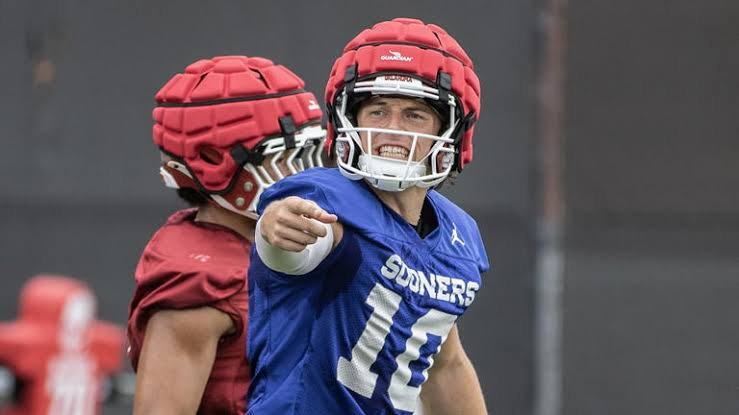
Breaking news out of Norman, Oklahoma, as Oklahoma Sooners quarterback John Mateer has officially secured a multi-year $4.5 million NIL extension with Panini America, one of the biggest names in sports memorabilia. This deal not only reaffirms Mateer’s rising star power on and off the field but also solidifies his marketability in the booming NIL era. The agreement includes a wide array of exclusive autographs, trading cards, and special fan engagement opportunities that will be rolled out over the next several seasons. For Panini, this partnership represents another major step in tying their brand to some of the most promising athletes in college sports.
What makes this announcement even more striking is Mateer’s decision to donate 15% of his earnings to the Purdue basketball program. While unusual for a player outside of the university to make such a contribution, it speaks to Mateer’s vision of supporting student-athlete communities and fostering stronger ties across collegiate athletics. Purdue, which has been navigating both immense expectations and increased visibility on the basketball stage, will surely benefit from such a generous gesture, especially in funding player development and facilities.
For Mateer, this NIL deal is more than just a financial win—it is a branding milestone. The Sooners’ quarterback is positioning himself not only as a leader on the field but also as a national face of college athletics marketing. In an age where NIL contracts are reshaping the landscape of college sports, his deal with Panini sends a clear message: quarterbacks of his caliber are not just athletes; they are cultural ambassadors. His willingness to contribute back into another sport’s program underscores his understanding of the broader athletic ecosystem.
This move could also have ripple effects within the Sooners’ locker room and recruiting pitch. Oklahoma has long prided itself on producing NFL-ready quarterbacks, and Mateer’s NIL success only adds to that tradition. For incoming recruits, seeing a current player leverage both his performance and his public image into multi-million-dollar contracts makes the Sooners’ program even more appealing. It shows that Norman is not only a football powerhouse but also a prime location for athletes looking to build their careers off the field.
The decision to support Purdue basketball, in particular, raises interesting questions about cross-program loyalty and partnerships in the NIL world. Mateer’s contribution could inspire other athletes to think beyond their immediate programs and use their platforms to make broader impacts across the collegiate sports community. It also reflects the growing interconnectedness of college athletics in the NIL era, where athletes are not bound by traditional school loyalties when it comes to philanthropy.
Ultimately, this deal represents the new face of college sports business. John Mateer’s $4.5 million NIL extension with Panini America, combined with his bold decision to donate a portion to Purdue basketball, highlights how athletes are now both entrepreneurs and philanthropists. The quarterback’s choice sets him apart as a forward-thinking leader who understands the power of influence, branding, and community impact in this evolving landscape. His actions may not only inspire fellow athletes but also reshape how fans, programs, and brands think about NIL opportunities going forward.
